A Passport for Your Wardrobe?
Deep Dive into Digital Product Passports (DPPs)

Fashion has long thrived on storytelling — heritage, craftsmanship, aspiration. But today, a new kind of story is emerging: this time, not backed by marketing narratives, but by verified data. Enter the Digital Product Passport (DPP) — arguably one of the most transformative developments shaping the future of fashion.
A Digital Product Passport is essentially a digital identity attached to a product, usually accessed via a QR code, containing information about materials, manufacturing origins, environmental impact, repairability and end-of-life options (European Commission framework under ESPR). In simple terms, every garment gains a transparent life history — from fibre to wardrobe.
From a fashion perspective, this marks a decisive shift toward radical supply-chain transparency. The EU’s Ecodesign for Sustainable Products Regulation will require textiles sold in Europe to carry DPPs by 2030, pushing brands to map complex global supply chains that were historically opaque.
Luxury fashion has moved early. Through the ‘Aura Blockchain Consortium’ (https://auraconsortium.com/) — founded by LVMH, Prada Group and Richemont — brands are embedding blockchain-powered product passports to verify authenticity, combat counterfeiting, and extend customer relationships beyond purchase through resale, repair and ownership tracking.

Digital Product Passports in Tod's My Gommino Collection
Tod’s has expanded its Digital Product Passport initiative to its iconic My Gommino shoe collection, enhancing transparency and customer engagement. Each pair now includes an embedded NFC chip that allows customers to register ownership and access a blockchain-secured digital certificate of authenticity via the Aura Blockchain Consortium. Beyond authentication, the passport offers storytelling around craftsmanship and artisanship, strengthening the emotional connection between product and owner.
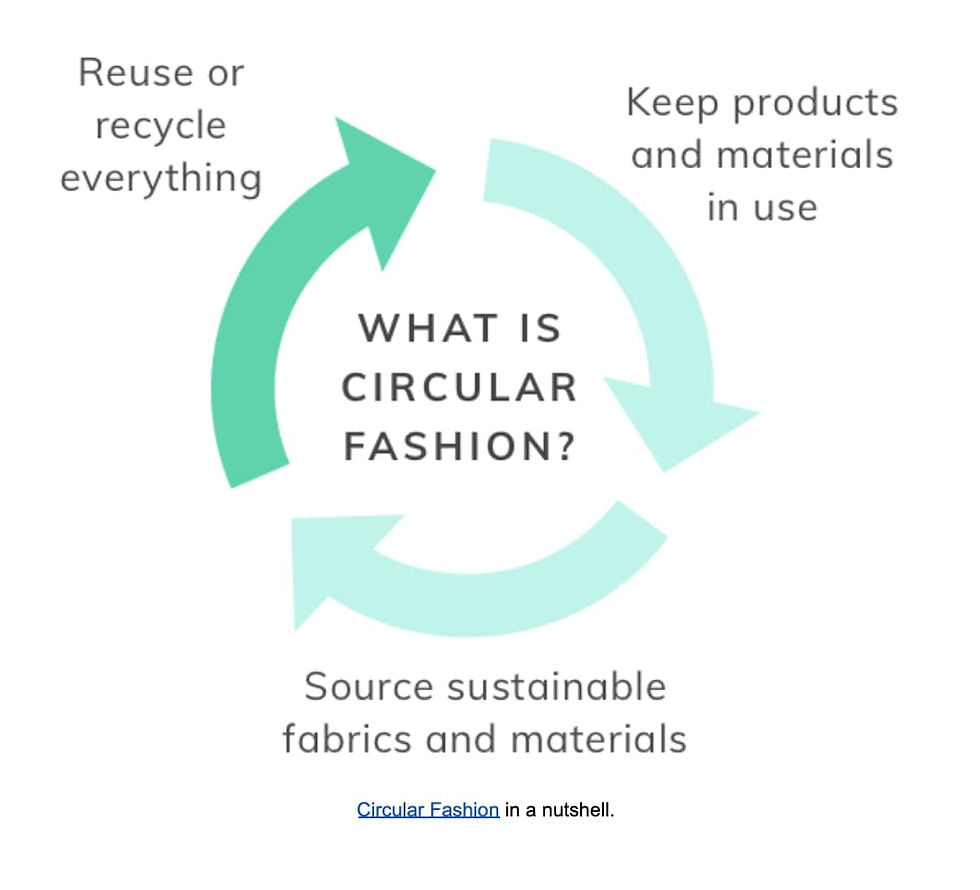
Although DPPs are not limited to luxury houses. London-based brand ‘Nobody’s Child’ began piloting Digital Product Passports in 2023, allowing customers to trace garments across suppliers and production stages. The initiative supports *circular fashion by enabling transparency around sourcing, sustainability and garment longevity.
What makes DPPs compelling is their dual role: regulatory necessity and branding opportunity.
Transparency itself becomes a luxury.
In an era where conscious consumption defines desirability, knowing where something comes from may soon matter as much as who designed it.
Fashion, it seems, is entering its most accountable chapter yet.
*Circular Fashion: a holistic approach to clothing production and consumption with an aim to eliminate waste and maximise resource efficiency. Circular fashion follows a ‘closed-loop’ system where materials and products are designed to be reused and recycled at the end of their lifecycle.
Circular fashion promotes the ideologies of reuse, repair, and recycling.
What are your thoughts on this revolution in the fashion industry?
Reference links:
Aura Blockchain Consortium (2023) The Digital Product Passport: A New Era of Luxury Unveiled. Available at: https://auraconsortium.com/insight/the-digital-product-passport-a-new-era-of-luxury-unveiled
European Union (2024) EU Digital Product Passport. Available at: https://en.wikipedia.org/wiki/EU_Digital_Product_Passport
Nobody’s Child (2023) Digital Product Passport. Available at: https://www.nobodyschild.com/pages/digital-product-passport
Vogue Business (2024) The Fashion Executive’s Guide to Digital Product Passports. Available at: https://www.vogue.com/article/the-fashion-execs-guide-to-digital-product-passports
Vogue Business (2025) Digital Product Passports: Lessons from an Early Adopter. Available at: https://www.voguebusiness.com


Very insightful!